
NEWS TAG
brand
Best Garage Floor Coating: Polyurea vs Epoxy vs Polyaspartic Flooring
Upgrading your garage floor is one of the smartest ways to boost durability, appearance, and value in one of the hardest-working spaces in your home. With several modern coating systems available, homeowners are often left comparing polyurea, epoxy, and polyaspartic options. Each of these coatings has developed a following thanks to its unique features, but choosing the best product isn't always straightforward. In this blog, we will walk you through the attributes, pros and cons, and costs of these popular garage floor coatings, and help you decide what fits your needs best.
Best Garage Floor Coating Choices
Homeowners seeking to protect and upgrade their garage floors will find the market filled with several main options: epoxy, polyurea, and polyaspartic coatings. Each solution brings its own set of performance traits, price range, and application nuances. Below, you'll find an in-depth look at each type, leading to a simple side-by-side comparison you can use to decide which product suits your garage for years to come.
1. What is Polyurea Garage Floor Coating?
Polyurea is a next-generation coating technology stemming from the polyurethane family. It's usually installed as a two-part system, where an isocyanate and a resin are mixed immediately before application. 100% solid polyurea coatings, in particular, are engineered to chemically bond with the concrete by searching for moisture and forming a linked structure with it, ensuring a tenacious bond.
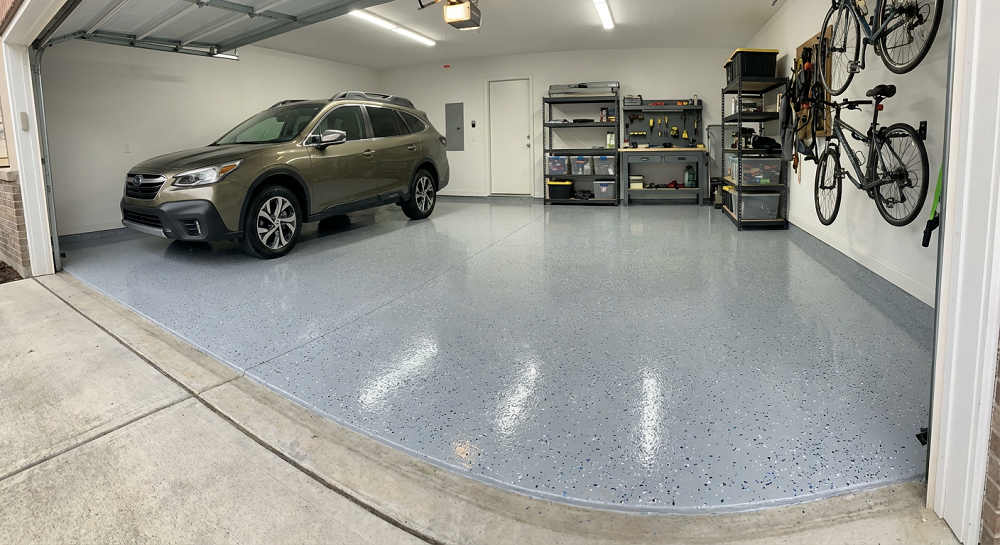
Polyurea Garage Floor Coating Pros & Cons
Pros:
✔️Extremely fast curing; floors can often be completed in a single day.
✔️Superior flexibility compared to epoxy, enabling it to expand and contract with the concrete, reducing the risk of cracking.
✔️High chemical, impact, and abrasion resistance, making it tough enough for garages, shops, and even commercial settings.
✔️UV stable; won't yellow or fade from sun exposure, which is especially beneficial if installed in a garage with lots of natural light or in outdoor areas.
✔️Handles hot tire pickup, chemical spills, and temperature extremes.
Cons:
❌Fast set times can make application difficult, requires precise timing and is best left to professionals.
❌Earlier versions offered limited protection against moisture migration unless special primers are used. However, modern formulations can now withstand notable hydrostatic pressure.
❌Higher upfront cost than epoxy.
Polyurea Garage Floor Coating Cost
Polyurea systems are priced higher due to their benefits and professional installation requirement. Expect to pay around $7 to $12 per square foot, with a typical single-bay garage project running close to $2,000 or more, depending on your region and surface size.
2. What is Epoxy Garage Floor Coating?
Epoxy has been the most recognized floor coating for decades. This two-part system involves mixing a resin with a hardener to create a chemical reaction that cures into a rigid, dense plastic-like coating. It has long been favored for its proven performance in both residential and heavy-duty industrial environments.
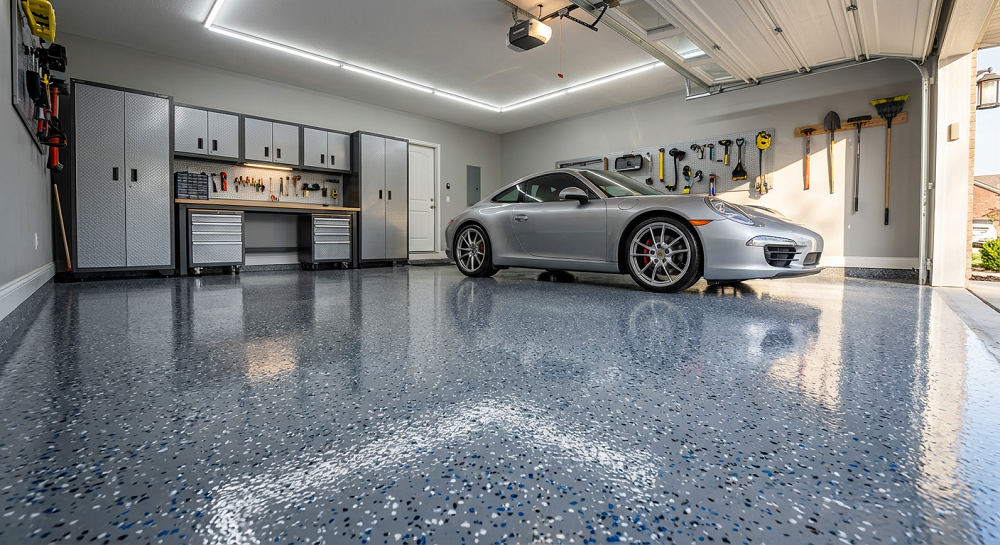
Epoxy Garage Floor Coating Pros & Cons
Pros:
✔️Time-tested, with a 75-year history in both residential and commercial settings.
✔️Tough surface that resists scratching, impact, and abrasion.
✔️Lower cost compared to polyurea and polyaspartic, making it appealing for those on tighter budgets.
✔️Extensive track record with many installers, so plenty of experience available.
Cons:
❌Not UV stable, will yellow or turn amber when exposed to sunlight over time unless protected by an additional UV-resistant topcoat.
❌Can become slick when new and may not stand up to hot tire pickup, resulting in peeling or delamination in some cases.
❌Less flexible compared to polyurea, resulting in a higher risk of cracking with concrete movement or temperature swings.
❌Cure time can stretch up to five days, which may force you to park elsewhere and cause inconvenience.
❌DIY kits are often lower in solids than professional-grade products, resulting in reduced durability for self-installed floors.
Epoxy Garage Floor Coating Cost
Costs vary from $3 to $7 per square foot, but can reach $12 for specialty or decorative versions. While it's less expensive upfront, epoxy is typically viewed as a moderate-term solution, with longevity usually cited between 3 and 5 years before wear becomes apparent, especially in high-use garages.
3. What is Polyaspartic Garage Floor Coating?
Polyaspartic is a specialized form of polyurea engineered with longer working times, which makes for a smoother installation and better finish quality. Originally introduced as a high-gloss topcoat, polyaspartic is now often used as the clear protective layer over flake or color chip garage floors.
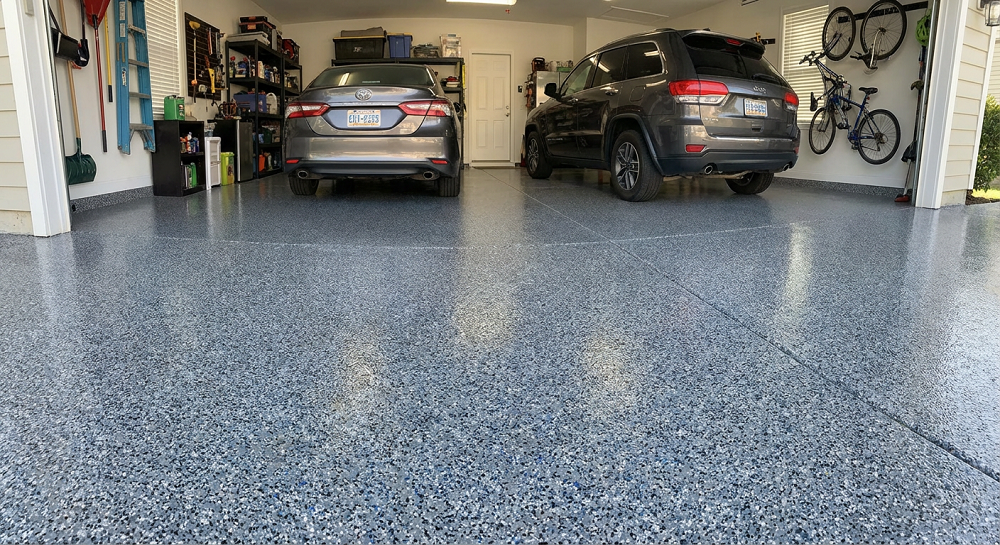
Polyaspartic Garage Floor Coating Pros & Cons
Pros:
✔️Combines the strength, flexibility, and chemical resistance of polyurea with a more forgiving working window during application.
✔️Completely UV stable; won't yellow or fade, which keeps the floor looking new.
✔️Outstanding wear and abrasion resistance, excellent for both homes and commercial spaces.
✔️Quick return to use: floors can often be walked on in hours and parked on within 24 hours.
✔️Maintains a high-gloss finish for a showroom look, resists stains, and is simple to clean.
Cons:
❌Typically costs as much or more than polyurea systems due to its technology and often being included as a final coat in multilayer systems.
❌Installation is still best left to experienced professionals to ensure even application and full performance.
Polyaspartic Garage Floor Coating Cost
Polyaspartic floor coatings land in the same cost range as polyurea, usually $7 to $12 per square foot or higher depending on system build and prep requirements. It’s an investment towards longevity and performance.
4. Polyurea vs Epoxy vs Polyaspartic Garage Floor Coating: What are the Differences
Below is a simple comparison of the key aspects of these three coatings.
| Feature | Epoxy | Polyurea | Polyaspartic |
|---|---|---|---|
| Cure Time | Up to 5 days | Less than 24 hrs | Less than 24 hrs |
| Durability | Moderate | Excellent | Excellent |
| UV Resistance | Poor | Excellent | Excellent |
| Flexibility | Low | High | High |
| Chemical Resistance | Good | Excellent | Excellent |
| Hot Tire Pickup | May occur | Resists | Resists |
| Install DIY? | Possible | Not recommended | Not recommended |
| Professional Install Preferred? | Yes | Yes | Yes |
| Cost (per sq ft) | $3–$7 | $7–$12 | $7–$12+ |
| Appearance | Range of colors/finishes | Range; often with chips | Range; high-gloss topcoat |
5. Epoxy vs Polyurea vs Polyaspartic Floor: Which is Better For Your Garage?
Choosing between polyurea, epoxy, and polyaspartic depends on your specific needs, usage, and budget.
Epoxy suits those seeking a cost-effective solution for low to moderate use spaces or for homeowners looking for a quick aesthetic improvement before selling.
Polyurea is ideal for those wanting a rapid install, maximum longevity, and toughness against chemical spills, abrasion, and sun exposure. It’s a strong match for high-use garages, workshops, and outdoor applications.
Polyaspartic delivers a superb balance of professional finish, longevity, and everyday toughness. Its superior UV resistance and high-gloss appeal attract owners seeking a showroom look combined with the ability to withstand serious wear.
Some professionals utilize a combination such as an epoxy primer for strong adhesion, color flakes for design, and a polyaspartic topcoat for ultimate protection and UV stability, resulting in a layered system that maximizes the best qualities of each product.
In the end, evaluating how you'll use your garage, how long you want the floor to last, the importance of UV resistance, and your willingness to invest upfront will guide the final decision. While a quality install by experienced pros remains key, a thoughtfully chosen coating will pay dividends in appearance and performance for years to come.